


Abstract
Background: Previous work has established a surprisingly high prevalence of acanthosis nigricans (AN) and its association with increased risk of type 2 diabetes in a Southwestern practice-based research network (PBRN). Our objective was to establish whether this high prevalence of AN would be present in other areas.
Methods: We examined the prevalence of type 2 diabetes and its risk factors and the prevalence of AN among patients aged 7 to 65 years who had been seen by one of 86 participating clinicians in a national PBRN consortium during a 1-week data collection period. In a subsample of nondiabetic matched pairs who had or did not have AN, we compared fasting glucose, insulin, and lipid levels.
Results: AN was present in 19.4% of 1730 patients from among all age ranges studied. AN was most prevalent among persons with more risk factors for diabetes. Patients with AN were twice as likely as those without AN to have type 2 diabetes (35.4% vs 17.6%; P < .001). In multivariable analysis, the prevalence ratio for diabetes was 2.1 (95% CI, 1.3–3.5) among non-Hispanic whites with AN and 1.4 (95% CI, 1.1–1.7) among minority patients with AN. In a subsample of 11 matched pairs, those with AN had higher levels of insulin and insulin resistance.
Conclusions: We found high rates of AN among patients in primary care practices across the country. Patients with AN likely have multiple diabetes risk factors and are more likely to have diabetes.
The landmark Diabetes Prevention Program study demonstrated that lifestyle interventions can prevent or delay the onset of type 2 diabetes mellitus (T2DM) by as much as 58%.1 These results underline the importance of early identification of patients who have a high risk for the development of diabetes so that lifestyle modification can be attempted. Identification of high-risk patients traditionally has been based on risk factors such as family history, overweight or obesity, and minority ethnicity. However, in communities where these risk factors are highly prevalent they may not be effective in eliciting action to prevent diabetes.2
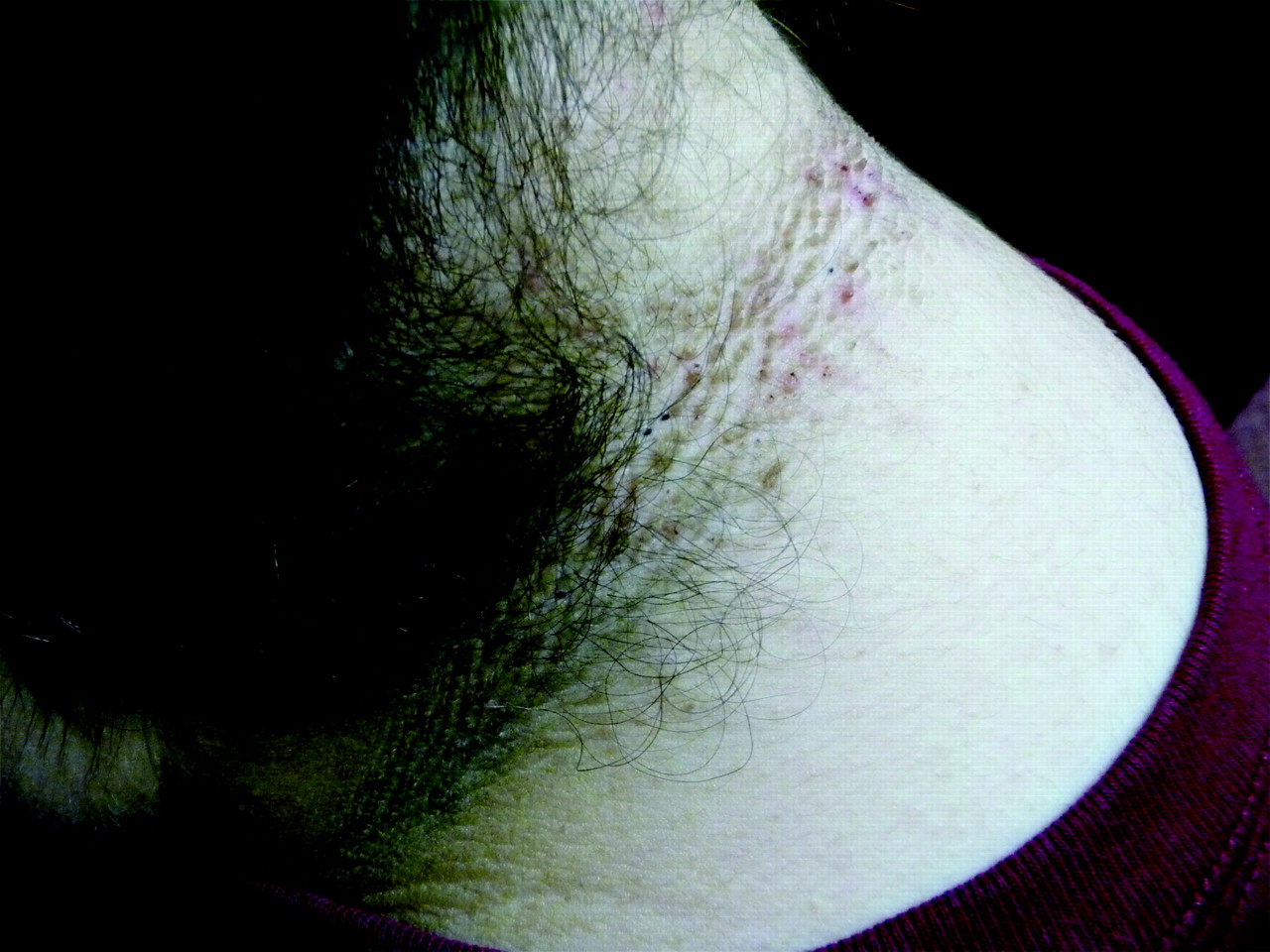
More recently, attention has turned to acanthosis nigricans (AN) as a possible marker of increased risk for the development of diabetes. AN, a dermatologic condition characterized by hyperpigmentation, hyperkeratosis, and papillomatosis, has been shown in many cases to be associated with hyperinsulinemia (Figure 1).3–9 Typical areas of involvement include the posterior neck, the axilla, the elbows, and the knees; when AN is present the neck is involved 93% to 99% of the time.10,11
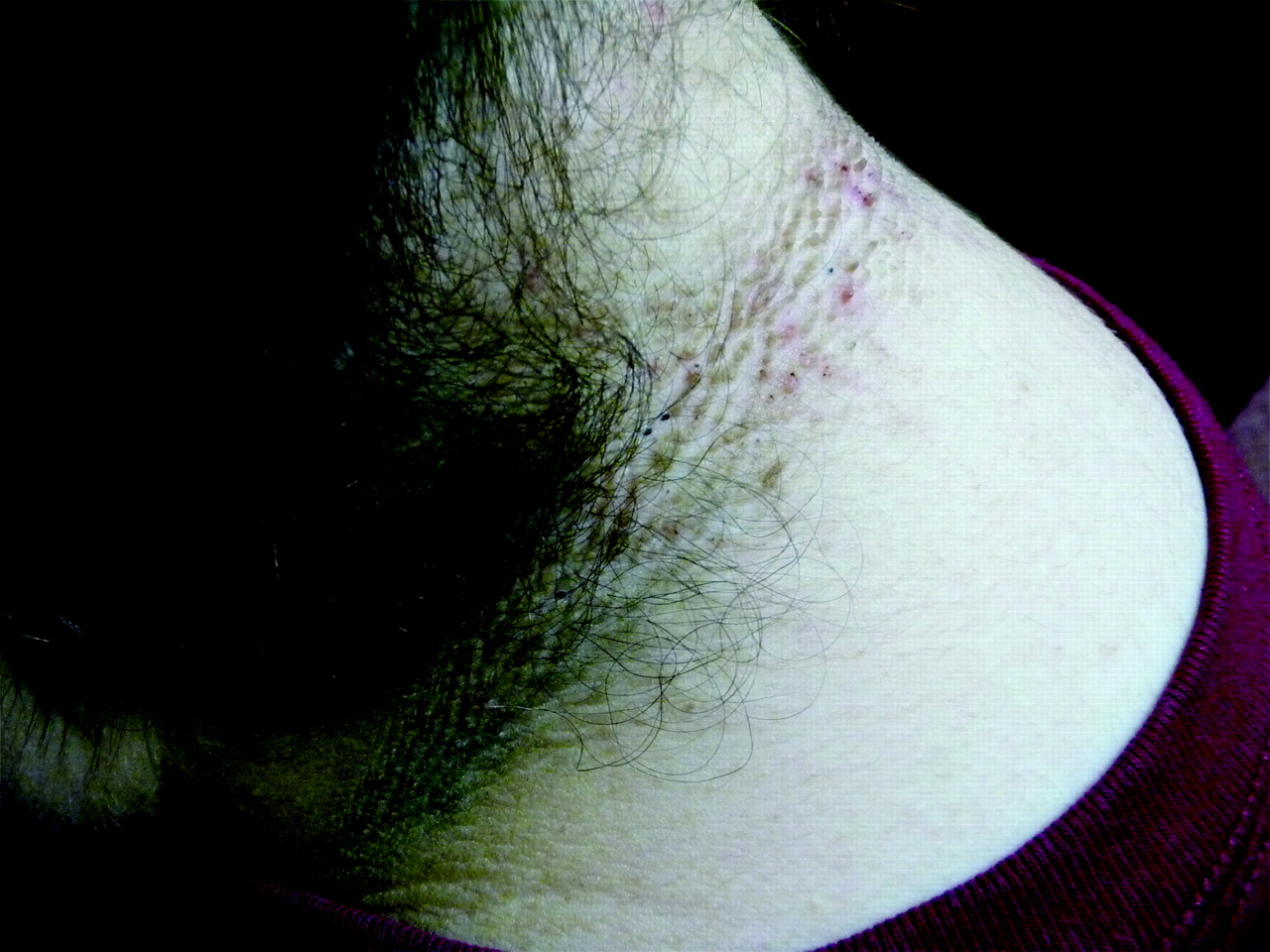
Acanthosis nigricans presenting on the posterior neck of a young woman.
AN offers an intriguing possibility for motivating lifestyle change. Among populations of patients who have a family history of diabetes, are overweight or obese, and/or are of minority descent, the value of the traditional risk factors in promoting lifestyle modification is uncertain. Because they are quite common and because they have no clear temporal or immediate relationship to the development of diabetes, their effectiveness in motivating behavior change is not clear. A readily apparent and rapidly identifiable physical examination marker, such as AN, that can identify patients with an increased risk for T2DM might help to stimulate discussions of lifestyle modifications in the primary care setting, as anecdotal reports have suggested.2,12 Because lifestyle changes may improve AN, leading to a reduction of insulin levels, it also may potentially enhance motivation for change.12
Previous work established a surprisingly high prevalence of AN and that it is an independent risk factor for T2DM among patients in a Southwestern practice-based research network (PBRN).12 Young persons aged 7 to 39 years were found to have an overall prevalence of AN of 19.2%, including 17% among children. Among this sample of largely Hispanic and Native American persons, AN was associated with an increased risk of having diabetes independent of age, body mass index (BMI), and a number of traditional risk factors. Because this previous work was conducted in only one state and among a somewhat restricted population, and because other reports of AN prevalence have used similarly restricted samples,3–9,13 we conducted a study to explore the prevalence of AN more broadly across a large, multiethnic, national PBRN consortium.
Methods
Study Design
We conducted a cross-sectional study of the prevalence of traditional diabetes risk factors and of AN among persons aged 7 to 65 years presenting for primary care. In addition, in a matched subsample of these primary care patients who had or did not have AN, we explored the association between AN and insulin resistance, fasting hyperglycemia, and lipid levels. Institutional review boards at each of the participating networks’ sponsoring institutions approved the study protocol.
Study Setting
The study was conducted in the PRImary care Multi-Ethnic Network (PRIME Net), a national consortium of 8 PBRNs that focuses on research addressing the health and health care of medically underserved populations.14 The 8 networks include the Research Involving Outpatients Settings Network (RIOS Net, New Mexico); Colorado Area Research Network (CaReNet); Southeast Regional Clinicians Network (SERCN, 11 Southeastern states); Southern Primary Care Urban Network (SPUR-Net, Houston); Collaborative Research Network (CRN, Northern California); Southwestern Ohio Area Research Network (SOAR-Net); Metro-Net (Detroit); and LA-Net (Los Angeles). The clinician members of these networks are located in urban, suburban, and rural settings and the patient populations seen in these practices present with patterns of diagnoses typical of primary care.15 Four of the networks—RIOS Net, CaReNet, SPUR-Net, and SERCN—participated in this study.
Samples
Clinicians
We recruited clinicians from each of the 4 networks through a combination of electronic messaging and personal contacts.
Patients
Each participating clinician gathered data about all patients aged 7 to 65 years who presented for care during a data collection period equivalent to 1 week (if a clinician was unavailable during part of the planned data collection week, the data collection period was extended to adjust for the unavailability). The age range was selected to assure the sample reflected (1) insulin resistance increases with puberty and (2) peak incident cases of T2DM. We excluded patients if they were pregnant, acutely ill, or unable to give informed consent for participation. For patients who declined to participate or were not eligible, the clinician or research assistant used a nonparticipation log to indicate which of several possible reasons led to nonparticipation.
Data Collection
Clinicians used either a personal digital assistant (PDA) running Pendragon Forms software (Pendragon Software Corp., Libertyville, IL) or paper data collection forms at the time of the patient encounter to record data regarding history relevant to diabetes risk, biophysical parameters, and the presence of AN. History items queried included family history of diabetes and personal history of diabetes, hypertension, and hyperlipidemia. Clinicians recorded height and weight routinely as part of the patient's visit to calculate BMI status. All patient data were collected, stored, and analyzed anonymously. Before finalizing the data collection instrument we piloted it among a group of 8 clinicians (none of whom participated in subsequent data collection). The final data collection instrument is available online.16
Before data collection began, each participating clinician completed training that focused on assuring a valid diagnosis of AN before patients could be enrolled in the study.17 The web-based training module included information about AN (appearance, classification, usual anatomic locations of the lesions, association with metabolic parameters, possible management strategies after a diagnosis of AN) and a number of photographs of AN. After the didactic portion of the module, clinicians completed an assessment of their understanding of AN, including the diagnosis of the images in 10 photographs as either AN or not AN. (The complete training and assessment module can be viewed online18). To assure an accurate diagnosis of AN, each clinician was required to score 100% on the assessment before they began data collection. If a clinician scored less than this standard, he or she reviewed their errors and took the assessment again. Each participating clinician received continuing medical education credit for the training.
We also provided each clinician a manual of written protocols, onsite initial training about study procedures (training was provided by study research coordinators), and telephone consultation with the coordinators. In some cases the research coordinators assisted in obtaining patient consent/assent. As a participation incentive, clinicians kept the PDAs they used in the study (data were removed after study completion).
We selected a subsample of patients for further study, including patients with AN who were randomly sampled from the parent study and then matched to comparison patients who did not have AN. The patients in this subsample were aged 22 to 65 years, had or did not have AN, and were matched for sex, age range, ethnicity/race, and BMI range. They also previously had given permission to be contacted again through a written consent process. With patient consent, we drew samples to measure fasting glucose, insulin levels, lipids, and free fatty acids; we measured their blood pressure and waist circumference using standard approaches to these measurements. From this phase of the study we excluded diabetic patients and patients taking steroid medication or medication for the treatment of hypertension, diabetes, impaired glucose tolerance, or dyslipidemia. Patients who were recalled to take part in this portion of the study received $50 for their participation.
Data Analysis
We transmitted data via secure Internet connections to a central server in Albuquerque, NM, exported them into an Excel worksheet (Microsoft Corp., Redmond, WA), and analyzed them using SAS software (version 9.1.3, SAS Institue, Inc., Cary, NC). We calculated descriptive statistics, including frequency distributions, for all variables. Bivariate relationships of AN to the following variables were evaluated: age; sex; ethnicity/race; family history of diabetes; personal history of T2DM, hypertension, and dyslipidemia; and BMI status. Responses of “don’t know” to the family or personal history variables were considered to be missing data during the analysis. We estimated differences in the prevalence of multiple diabetes risks between those with AN and those without AN using the Mantel-Haenszel χ2 test for trend. Log-binomial regression modeling19 was conducted to determine prevalence ratios for the outcome of T2DM. Analysis showed ethnicity/race to be an effect modifier, so models for non-Hispanic whites and minority ethnicity/race—which included African Americans, Hispanics, and others (Asian or mixed minorities)—were calculated separately. Final models contained age, sex, family history of T2DM, hypertension, dyslipidemia, AN, and BMI status.
Paired t tests or Wilcoxon signed rank tests, when appropriate, were used to compare glucose, insulin, lipids. The homeostasis model assessment (HOMA) was used to compare the insulin resistance between those patients who had and did not have AN.
Results
Sample
Eighty-six clinicians (20 from RIOS Net, 30 from Spur-Net, 14 from CaReNet, and 22 from SERCN) contributed patient data to the study. Clinicians in the study were primarily in family practice (72%); the remaining physicians practiced general internal medicine or pediatrics. Seventy-eight percent were MD/DOs; physician assistants/nurse practitioners made up the rest of the sample. Spur-Net clinicians used paper-based data collection; all other networks used the PDAs for data collection. These clinicians reported on encounters with a total of 2264 patients, of whom 244 either declined participation or were not solicited (eg, as a result of being acutely ill). Of the remaining 2020 patients, 290 were subsequently dropped from the analysis because of incomplete data or eligibility reasons, leaving a total of 1730 patients for analysis. Table 1 shows that these patients represented a full spectrum of ages. Reflecting the nature of primary care patient populations, the patients were predominantly women and were more commonly middle-aged and older. Approximately 70% were from a minority group, which is consistent with the makeup of the PRIME Net consortium. Two hundred six of the patients (12%) were from CaReNet, 406 (23%) were from RIOS Net, 372 (22%) were from SERCN, and 746 (43%) were from Spur-Net.
Characteristics of the Study Sample (N = 1730)
Prevalence of T2DM, Diabetes Risk Factors, and AN
Tables 2 and 3 display our findings with regard to the prevalence of diabetes and its risk factors and of AN, stratified by age and ethnicity. Twenty-one percent of the patients seen in primary care had a diagnosis of T2DM, with the expected variation by age and ethnicity. We found high prevalence rates of family history of diabetes (63.7% of all the patients in the sample), of overweight or obesity (74.8% of the sample), and of hypertension (39.3% of the sample) and dyslipidemia (37.7% of the sample) (Table 3). These overall rates of hypertension and dyslipidemia were high despite the fact that these conditions were almost absent among children in the sample. Prevalence of overweight and obesity also showed age variation, but even among children the prevalence was 49%. On the other hand, AN, which was present in 19.4% of the sample, was equally prevalent among all ages (including children, 18.2% of whom had AN). Rates of AN were lower among non-Hispanic whites (P < .001).
Type 2 Diabetes Mellitus Prevalence by Age and Race/Ethnicity
Prevalence of Selected Risk Factors for Type 2 Diabetes Mellitus and of Acanthosis Nigricans by Sex, Age, and Race/Ethnicity
We also evaluated differences by sex for the prevalence of diabetes and of the risk factors listed in Tables 2 and 3. After adjusting for multiple comparisons, we found that there were no significant differences by sex (data not presented).
Relationship of AN to the Number of Diabetes Risk Factors
When we examined the relationship between the presence of AN and the number of risk factors for diabetes present in a patient, we found a trend toward a higher prevalence of AN in patients with a greater number of diabetes risk factors (Mantel-Haenszel, P < .001). The rate of AN was 22.0% among those with 3 T2DM risk factors, 28.1% among those with 4 risk factors, and 38.1% among those with 5 risk factors. The relationship between the presence of AN and the number of risk factors for diabetes was strongest in the 20- to 39-year-old age group (Table 4). Patient sex was not a significant predictor in this relationship.
Prevalence of Acanthosis Nigricans by the Number of Type 2 Diabetes Risk Factors, Stratified by Age
Relationship of T2DM to AN
We found that among all patients combined T2DM was significantly more likely to be present in patients with AN (35% of whom had T2DM) than in patients without AN, 18% of whom had T2DM (P < .001) (Table 5). This relationship held true across all race/ethnic groups, with ratios of prevalence rates of T2DM among patients with and without AN varying from 1.49 in Hispanic persons to 3.58 in non-Hispanic whites. There were no significant differences by sex.
Prevalence of Diabetes by Presence of Acanthosis Nigricans (AN)
Using log-binomial regression analysis, we studied the relationship of the prevalence of T2DM among adults to each of several predictor variables (T2DM risk factors, age, sex, and AN) while controlling for the presence of all the other predictor variables (Table 6). In the overall sample of adults, older age, male sex, family history of diabetes, hypertension, and dyslipidemia were each found to be independent risk factors for presence of T2DM. Although BMI grouping is highly significantly associated with the prevalence of T2DM in univariate analysis, it did not emerge as a significant predictor in multivariate analysis, where the variance was explained by other variables with which BMI grouping was associated. Stratification by race/ethnicity resulted in some differences in significant relationships from the overall group. Age among non-Hispanic whites and male sex in both subgroups did not reach significant differences, likely because of the reduced sample size of the subgroups (possible type II error).
Prevalence Ratios of Diabetes by Risk Factor Using Multivariate Models by Race/Ethnicity
AN was a statistically significant, independent predictor of the presence of T2DM among the sample as a whole and for each of the ethnicity groupings. Of note, the prevalence ratio was greater for non-Hispanic whites (2.10) than for persons of minority ethnicity (1.47).
Relationship of AN to Biological Parameters
Eleven matched pairs of patients with and without AN provided fasting blood samples for further analysis. Table 7 shows that only measures of fasting insulin and insulin resistance approached statistically significant association with AN (significance level, .005 after Bonferroni correction for multiple comparisons). Measures of lipids, glucose, waist circumference, and blood pressure were not associated with AN. None of the other biological parameters examined approached statistical significance.
Differences in Biophysical and Metabolic Parameters among Matched Pairs of Patients (n = 11) with and without Acanthosis Nigricans (AN)
Discussion
We found an alarming prevalence of AN across all of the primary care population groups that were studied. The prevalence was highest among members of minority groups and included the entire age spectrum studied (from 7 to 65 years of age). However, even among non-Hispanic whites, the overall prevalence was 6%. Although the exact relationship between AN and diabetes is not yet fully understood, its association with hyperinsulinemia—both in our subsample and in the published literature—suggests the possibility that the growing epidemic of diabetes could be on the verge of a dramatic turn for the worse among the groups represented in our sample. The consistency of our results across the geographic regions represented in this study emphasize the importance and generalizability of those results.
In addition to the high prevalence of AN, our study had several key findings:
AN was equally prevalent among children and adults;
AN was most highly prevalent among persons with a greater number of risk factors for diabetes and among persons with diabetes;
AN was an independent risk factor for the presence of diabetes after controlling for multiple standard risk factors, with its strongest association among non-Hispanic whites;
BMI was strongly associated with the prevalence of T2DM in univariate analysis but was not significantly associated with T2DM in multivariable analysis; and
Among biophysical parameters, AN was associated only with high fasting insulin levels and insulin resistance.
Together these findings underline the emerging importance of AN in patient care. The relationships between AN and diabetes and between AN and a condition that is a precursor to diabetes (hyperinsulinemia and insulin resistance) establish the opportunity to use this visible marker of diabetes risk in diabetes case identification and preventive counseling. Earlier publications suggest that both of these actions (case identification and preventive counseling) are enhanced by the diagnosis of AN.2,12
An unexplained finding in our study was the lower prevalence of AN among non-Hispanic whites in our sample. In a companion publication17 we noted that our participating clinicians initially had greater difficulty diagnosing AN in fair-skinned persons, though with training this difficulty was resolved. It is possible that classification bias may have led to an underestimation of the rate of AN among non-Hispanic white persons, but this seems unlikely to explain the full difference in the rates we observed. Other studies have reported similarly lower rates of AN (3.1% to 4.2%) among non-Hispanic whites.12,13
Comparison with Previous Studies
Our findings of the high prevalence of AN are consistent with the results of an earlier study that showed comparable rates of AN among a large sample of Hispanic and Native American persons in New Mexico.12 The high prevalence of AN among children in both studies is notable. Other studies have documented comparable rates of AN among African American, Hispanic, Native American, and non-Hispanic white children in Chicago primary care practices13 and in New Mexico middle schools.6 The current study, with a sample drawn from 4 geographic regions, establishes that high prevalence of AN is not unique to limited areas.
Investigators have begun to explore the relationship of AN to biophysical and metabolic parameters. Although some of these studies have used selected samples (eg, obese children, people from a single Native American tribe, etc.), all have found a relationship to high levels of insulin, as we did.3,4,6–9,20–23 Unlike our findings, some studies have also shown a relationship to triglyceride levels, though this relationship does not seem to have been subjected to multivariable regression analysis to control for the relationship between insulin and triglyceride levels.22,23
Future Research
The composite picture created by our study and those previously published suggests that future research in this area should now focus on the natural history of AN as a precursor for T2DM in primary care populations. What can clinicians tell the patient who does not have T2DM but does have AN with regard to the probability of future development of diabetes (particularly those patients with standard risk factors, such as a positive family history)? What will the time course be from the development of AN to the onset of diabetes? More work is needed to test the value of treating hyperinsulinemia with either lifestyle modification or pharmaceuticals among patients with AN.24,25 In addition, after reports of the impact of an AN diagnosis on diabetes case identification and preventive counseling, further research is needed to document these observations and to explore methods for maximizing the effect of AN diagnosis on either action.
Limitations
As noted above, classification bias is possible when a variety of examiners identify cases and when the appearance of AN varies somewhat by ethnic/racial group. We took steps to standardize AN diagnosis and to assure that clinicians were able to correctly diagnose AN (though web-based training); it therefore seems unlikely that any such bias would have resulted in substantially misestimating AN rates. Our PBRN consortium focuses on medically underserved communities and over-represents minority, low-income persons. These primary care practices see high rates of patients with risk factors for chronic diseases and are therefore useful laboratories in which to study issues related to disease prevention.26 However, it is possible that rates of AN in other communities and populations may differ from those we have observed. It is also important to recall that our sample, having been drawn from primary care, may not validly reflect rates of AN among the broader population. However, Mukhtar and colleagues6 demonstrated similar rates of AN in a largely Hispanic, population-based sample in New Mexico, suggesting our sample may not differ substantially from the larger population in this regard. Our subsample of 11 matched pairs may have been small enough to lead to a type II error in the nonsignificant biophysical comparisons between the patients with and without AN. However, none of the nonsignificant comparisons approached significance levels, and our findings were consistent with those published elsewhere (see above), which suggests that our findings were externally valid.
Conclusions
From a geographically diverse sample of primary care patients, this study presents consistent evidence of high rates of AN and of the association of AN with the risk of diabetes and with hyperinsulinemia and insulin resistance. Because AN is a quickly identifiable marker of risk for diabetes, its presence provides primary care clinicians with a new tool for diabetes case identification and preventive counseling. Further work is needed to clarify the relationship of AN to subsequent development of diabetes and its prevention.
Acknowledgments
The authors express their appreciation to the clinicians and patients of the PRIME Net practices, who willingly gave their time to participate in this project. The authors also appreciate the key contributions to the study made by Toye Metoyer; Sherry Holcomb; Douglas Fernald, MA; Anthony Adams; Viola Benavidez; Angela N. Cortez; and Javan Quintela.
Notes
This article was externally peer reviewed.
Funding: This project was funded in whole or in part with Federal funds from the National Institutes of Health under contract no. HHSN268200425211C, “Re-Engineering the Clinical Research Enterprise,” and from grant no. D54HP00032-07-00 from the Health Resources and Services Administration.
Conflict of interest: none declared.
See Related Commentary on Page 429.
- Received for publication September 18, 2009.
- Revision received February 16, 2010.
- Accepted for publication March 1, 2010.
References
In this issue


Jump to section
Related Articles
Cited By...
- Single-centre case-control study investigating the association between acanthosis nigricans, insulin resistance and type 2 diabetes in a young, overweight, UK population
- Cultivating a Cycle of Trust With Diverse Communities in Practice-Based Research: A Report From PRIME Net
- Reports of Persistent Change in the Clinical Encounter Following Research Participation: A Report From the Primary Care Multiethnic Network (PRIME Net)
- Card Studies for Observational Research in Practice
- Guest Family Physician Commentaries