


Abstract
Background: Breast feeding is commonly accepted as the preferred method of infant nutrition for various reasons, both nutritional and emotional. For some who have become parents by adoption, there is a strong desire to induce lactation for adoptive nursing.
Methods: Information regarding adoptive nursing was initially obtained for the author’s personal experience from searching the internet and speaking with other adoptive mothers. The medical literature was also searched through OVID/MEDLINE using pertinent terms, including induced lactation, adoptive nursing, domperidone, and metoclopramide.
Results: Use of physiologic and pharmacologic methods can help an adoptive mother bring in a milk supply. The quantity may not be sufficient to entirely meet an infant’s nutritional needs. However, for many the emotional benefits remain. There is some controversy surrounding the use of domperidone and metoclopramide for induced lactation. Herbals such as fenugreek have not been researched. Physicians can help their patients understand the current tools available to assist them with this unique endeavor.
Both the American Academy of Family Physicians and the American Academy of Pediatrics have policy statements on breastfeeding that include assisting or encouraging adoptive mothers to induce lactation for adoptive nursing.1,2 That said, there is very little in the medical literature on how to help an adoptive mother in her endeavor to induce lactation. Probably, most physicians and adoptive parents are unaware of this potential opportunity. Many adoptive parents have little notice of placement dates or are adopting older infants who are less likely to want to nurse.
Although undoubtedly a small trend, many women are attempting to nurse their adopted babies. Much of what information is available comes from various Internet sources and a few publications. Parents are able to access lactation protocols on the Internet and from other laypersons via Internet groups. These protocols involve using various methods from simply performing nipple stimulation to using multiple medicines and herbs to mimic the physiology necessary to produce milk.
Methods
For this article, the medical literature was reviewed in search of evidence to support currently popular recommendations for inducing lactation. The terms adoptive nursing, induced lactation, metoclopramide, domperidone, galactogogue, fenugreek, and blessed thistle were searched in the databases OVID/MEDLINE, Micromedex, and Natural Medicines Comprehensive Database. Searches were limited to English language articles. Articles that had to do with medication effects on lactation, placebo-controlled trials or drug-drug comparisons, and reviews of induced lactation cases were reviewed. Articles that were referenced frequently by other sources were also reviewed. Also because of the attention given to domperidone by the US Food and Drug Administration (FDA), specific articles were searched using domperidone or metoclopramide and arrhythmia. There were no large studies and no randomized controlled trials. Most of the objective data were obtained from women already lactating.
Background
To understand how one might artificially induce lactation, it helps to review the physiology of lactation. We know that several hormones work together in pregnancy to induce the breast changes that are conducive to lactation. Although estrogens stimulate the ductal epithelial cells to elongate, their primary role appears to be to potentiate prolactin production. Progesterone induces duct formations that branch from the main tubules. It is also considered the key inhibiting hormone, and the fall in progesterone on delivery of the placenta is the trigger for secretion of milk. Human placental lactogen (HPL) is associated with mobilization of free fatty acids, inhibition of peripheral glucose utilization and stimulation of colostrum secretion.
Prolactin is the essential hormone in lactation, and attempts to induce lactation largely center on increasing prolactin. Prolactin is necessary for complete lobulo-alveolar development. It stimulates milk production and secretion from alveolar cells. Together with estrogen and progesterone, it attracts and retains IgA immunoblasts to the mammary tissue for development of the mammary gland immune system. The production and release of prolactin is dependent on the inhibition of prolactin inhibitor factor (PIF) secreted by the hypothalamus. PIF is dopamine mediated.
Oxytocin is responsible for the milk ejection reflex. It does not contribute to milk production directly.
Other hormones involved in breast development include growth factor, insulin, and corticosteroids. These hormones work together in a complex system of interactions.3
The most important physiologic component of the lactation process is nipple stimulation. Nipple stimulation causes the production and release of prolactin from the pituitary gland. Nipple stimulation, as well as auditory, olfactory and visual cues, induces oxytocin release. These hormones stimulate milk synthesis and milk ejection. Although prolactin is necessary for milk secretion, prolactin levels do not directly correlate with milk volume. More importantly, local factors within the mammary gland that depend on milk removal are responsible for the day-to-day regulation of milk volume. When milk is not removed, secretion stops in a few days. Thus suckling, emptying the breast and adequate precursors are essential to effective lactation.3
Galactogogues
Galactogogues are medications that are used to induce, augment, or maintain lactation. The most popular induction protocols include the use of one or more of the galactogues listed below.
Metoclopramide
Metoclopramide antagonizes the release of dopamine, which in turn inhibits the effect of PIF on the pituitary. Consequently prolactin production increases. Because metoclopramide crosses the blood-brain barrier, its use can be limited by significant CNS side effects. Sedation is the most common side effect, occurring in up to 10% of users. Depression occurs less frequently. Extrapyramidal side effects, such as tardive dyskinesia (∼1%), can occur and are more common in women and children.4,5
Although the medical literature reports a low incidence of depression, the widely held belief among women seeking to induce lactation is that depression is a very significant and common side effect. Therefore, many women choose to seek other alternatives.
Domperidone
Domperidone, like metoclopramide, is a dopamine antagonist. Side effects are few and include dry mouth, skin rash or itching, headache, and gastrointestinal disturbances. Unlike metoclopramide, domperidone does not cross the blood-brain barrier but exerts its effect peripherally and is associated with few CNS side effects. The pituitary is outside the blood-brain barrier and is affected by the increased dopamine levels. There have been rare case reports of dystonia with domperidone compared with metoclopramide. Domperidone is not available commercially in the United States.5,6
In July 2004, recognizing that many women were using domperidone to increase milk production, the FDA issued a warning against importing and using domperidone for any use, including lactation.7 The warning is based on published reports of cardiac arrhythmias and sudden death in patients treated with intravenous domperidone.8–11 Some, but not all, of these patients received doses above the manufacturer’s recommended dose. Most of the patients were also being treated simultaneously with various chemotherapy drugs. At least one study on animal hearts demonstrated prolongation of cardiac repolarization with doses of domperidone used clinically.12
Although in controlled trials metoclopramide was not associated with cardiac arrhythmias, there have been case reports of arrhythmias and heart block with therapeutic doses of it as well.13,14
Women using the lactation protocols report having fewer side effects with domperidone, and although not commercially available in the United States, its use is suggested on many of the popular protocols.
Sulpiride
Sulpiride is a selective dopamine-2 antagonist with antipsychotic and antidepressant activity. Sedation and extrapyramidal side effects are quite common. Weight gain is also an issue. Sulpiride is not available in the United States.4,5
Chlorpromazine
Chlorpromazine is also an antipsychotic that appears to work by blocking dopamine receptors. Side effects commonly include dystonic reactions and anticholinergic effects.4,5
Thyrotropin Releasing Hormone (TRH)
TRH increases the release of prolactin. However, it also increases the release of TSH. There have been short-term studies of the effects of TRH on lactation. Long-term use is associated with hyperthyroidism.4
Although written about in the literature, none of the currently popular protocols mention use of sulpiride, chlorpromazine, or TRH.
Fenugreek
Fenugreek, Trigonella foenumgraecum, is an herb from the Fabaceae family, which includes peas and peanuts. This herb is very commonly recommended on breastfeeding web sites and references as a supplement to increase lactation. The active ingredients are thought to be in the seed, although the mechanism of action is not clear. It is considered “possibly safe” when used in medicinal amounts, although it is considered “possibly unsafe” in children.15 Side effects include diarrhea and flatulence, but the most noticeable is a body odor similar to maple syrup. There is also the potential for allergies because it is part of the pea family.
Blessed Thistle
Blessed thistle, Cnicus benedictus, is another herb recommended to enhance lactation. It is distinctly different from milk thistle. It is a member of the Asteraceas/Compositae family, which includes ragweed. Many parts of the plant are used to treat various ailments. The plant may have bacteriostatic, antitumor, and antihistamine activity. How it works to enhance lactation is unknown. Blessed thistle is thought to be possibly safe when used medicinally.15 Side effects include gastrointestinal irritation and potential allergies, because it is part of the ragweed family.
Many other herbs are reported to aid in lactation but are not suggested with quite the frequency as the aforementioned. Some of these include milk thistle, fennel, alfalfa, oats, and marshmallow root.
Protocols For Induction
The internet and other breastfeeding references have a variety of recommendations on how to induce lactation. If a woman is aware of the estimated placement date, she can begin to prepare weeks to months in advance. It may take several weeks or months of preparation to obtain results. If placement is quick and there is no time for preparation, she can nurse with one of the available supplementers.
The cornerstone of any induction protocol is nipple stimulation (evidence level C, uncontrolled, case studies). In fact, some protocols give no recommendations other than frequent nipple stimulation, usually every 2 to 3 hours, to mimic the nursing habits of newborns. Stimulation can be done manually or with a breast pump. Women report varying success with the different methods. The popular wisdom is that using a double set up electric pump will give the best benefit and be the most time efficient. However, some women report better success with manual expression of the breast.
As previously discussed, increased levels of many hormones contribute to the breast changes needed for lactation. We can induce elevated levels of three of these hormones with pharmaceuticals. This is thought to augment the process of lactation by imitating changes that would otherwise occur in the pregnant state.16
Estrogen and progesterone levels can be raised by using hormone supplementation. Popular protocols use a combination oral contraceptive pill, usually one with a higher progestin effect.17 These hormones are used to induce structural changes in the breast tissue, but they impede lactation. Therefore after breast changes have occurred but before nursing, they must be stopped. The effect is similar to parturition and delivery of the placenta.
Adding one of the dopamine antagonist will increase prolactin levels. The drug can be started before nursing and is usually continued while nursing. Some women are able to successfully wean to a lower dose or completely off, whereas others report that doing so diminishes their milk supply.
The addition of herbs to augment milk supply is largely based on anecdotal evidence. Among the herbs mentioned above, fenugreek and blessed thistle appear more often in the popular protocols.
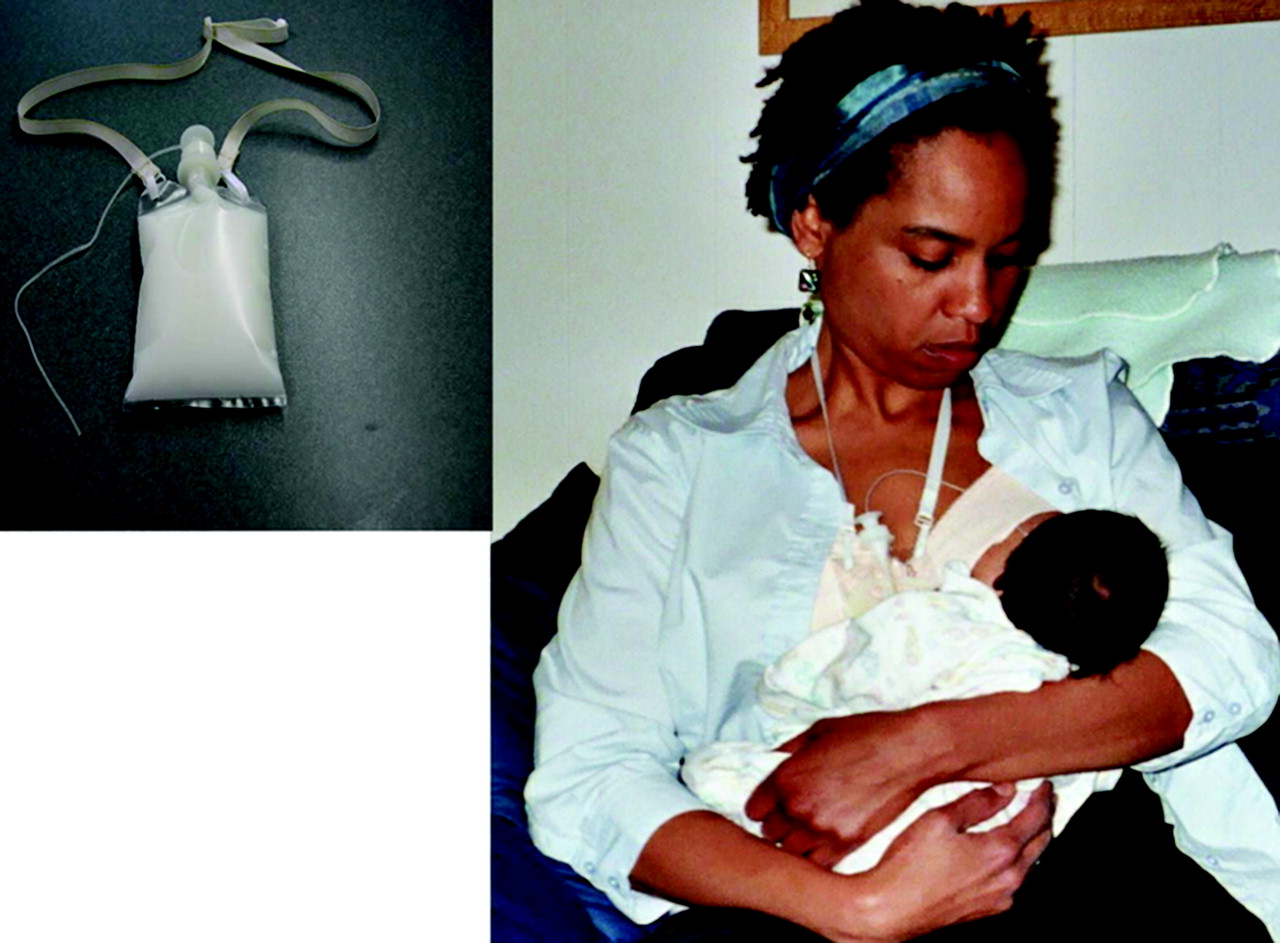
Most women are going to need to supplement their milk supply with formula. Since frequent nursing encourages milk production, it is desirable to keep the baby at the breast for all feedings. The best way to achieve both goals is to use a supplemental feeding device worn at the breast that delivers formula (or stored breast milk). Two popular devices are the SNS by Medela (McHenry, IL) and the Lact-Aid Nursing Training System (Lact-Aid International, Inc., Athens, TN) (Figures 1–3).
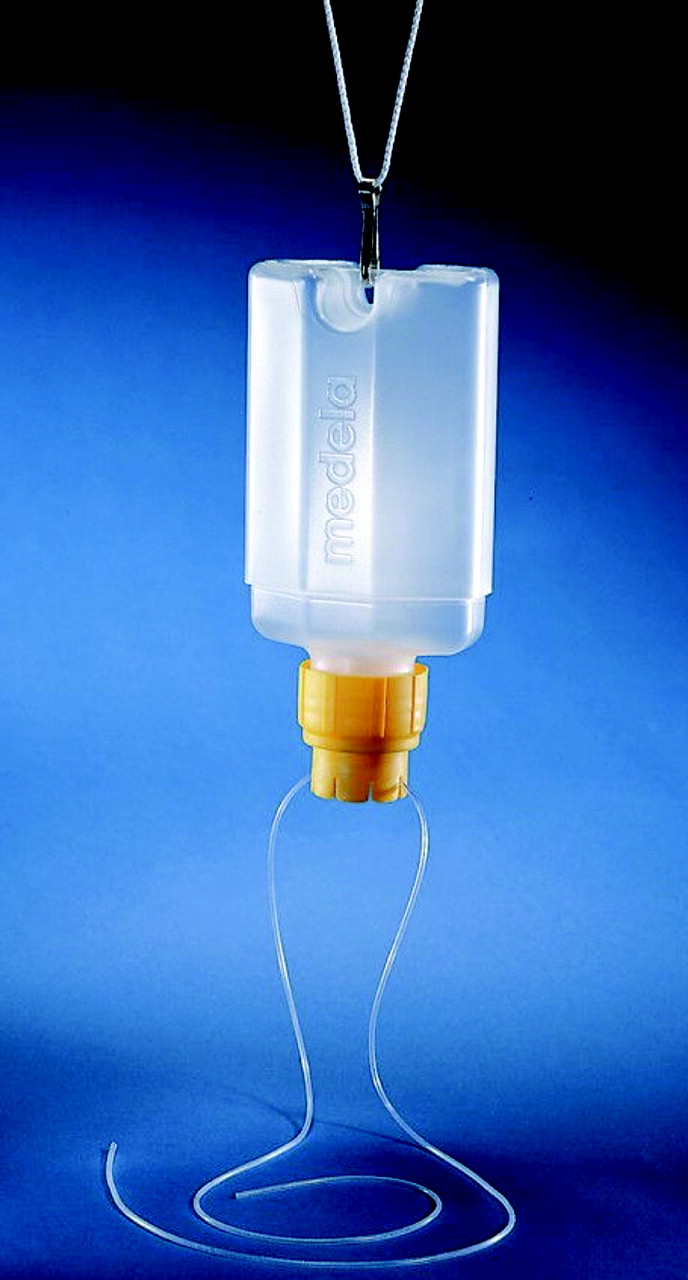
SNS by Medela

Lact-Aid Nursing Training System
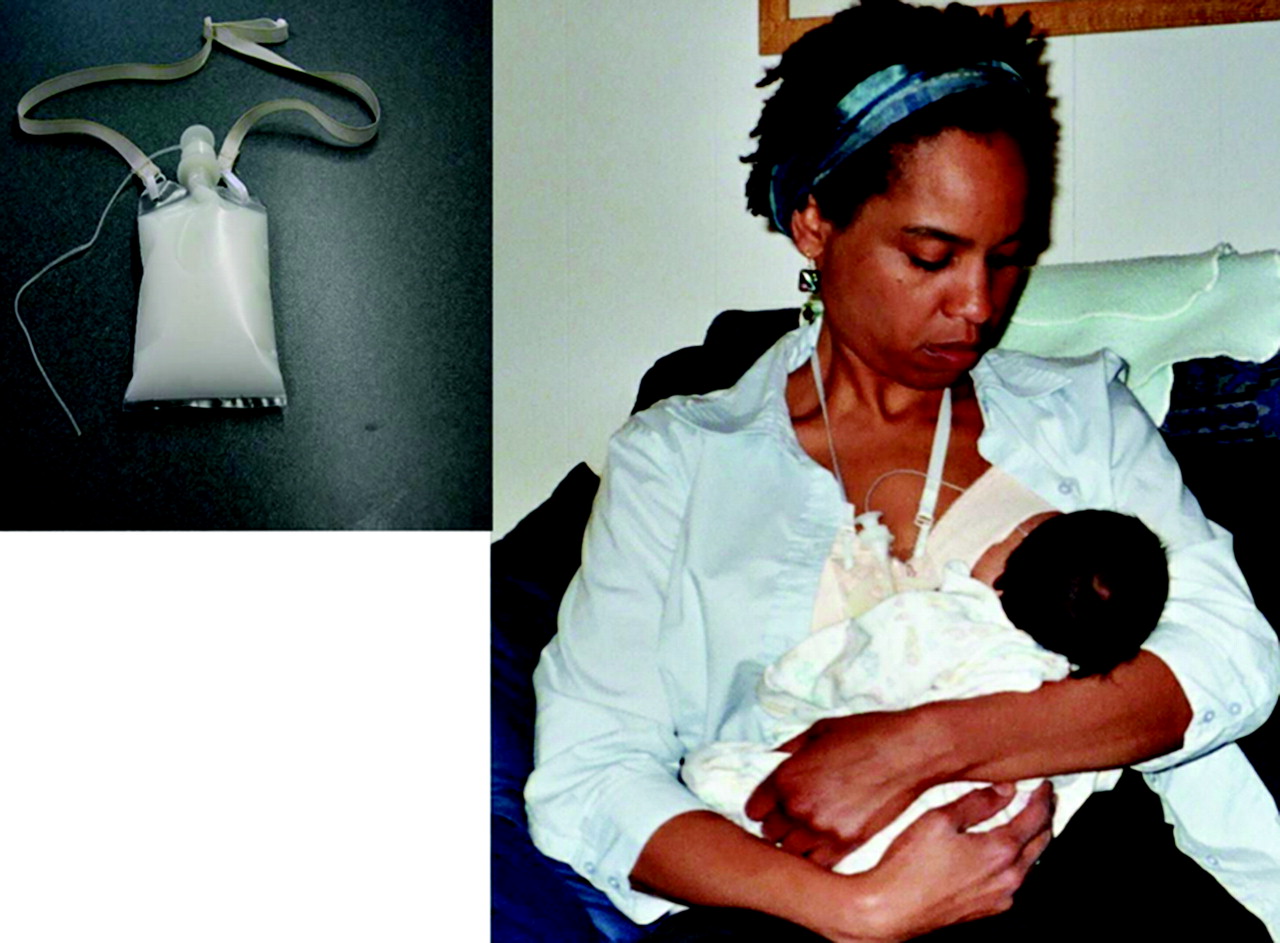
Nursing with the Lact-Aid
Supporting Evidence
Much of what is recommended in the area of induced lactation is based on anecdotal experience because the few studies that exist are small, short-term studies or case reports.18–21 Several studies that do evaluate the effects of medications on lactation were undertaken in puerperal women who were experiencing lactation difficulties.22–24 The recommendations that these drugs be used in adoptive mothers presupposes that they will have similar effects in nonpregnant women.
Placebo-controlled trials of metoclopramide found doses of 10 to 15 mg three times a day to be effective in increasing prolactin and milk production in women with lactation difficulties. Similarly, a placebo-controlled study of domperidone 10 mg three times a day demonstrated increases in prolactin levels and milk production in women who were pumping milk for their infants in the NICU. All these studies were short term (2 to 3 weeks).
In a head-to-head comparison, single doses of 5 mg and 10 mg of metoclopramide and 10 mg of domperidone were administered to nonpregnant women. Prolactin levels were then measured at various time intervals. The findings of this study were that nulliparous women had a greater response (percentage of elevation above baseline) to the medications, having the greatest response to metoclopramide (10 mg). Multiparous women had similar responses to all the medication doses.25
The largest study of adoptive nursing is a retrospective study of 240 women that primarily assessed maternal attitudes and experiences. Although most women needed to offer supplementation throughout the nursing period, women who had nursed before were more likely to be able to drop the supplemental feeds at some point.26
Practical and Emotional Considerations
The mother who chooses to induce lactation will likely need extra support in her efforts to locate supplies, learn how to use them, and with mother-infant issues, such as latching on. The physician may be well equipped to assist her. If not, enlisting the assistance of a certified lactation consultant can be extremely valuable. She also will likely need emotional support as well. She may find that others view her decision to nurse a child who is not biologically hers as odd or unnatural or not worth the effort she is making. She may be dealing with the other emotions and stresses of a sudden placement or long distance travel. Add to that the time commitment of frequent nursing or pumping. These are all important considerations when deciding whether to pursue adoptive nursing.
Although most women who choose to pursue adoptive nursing are aware of this fact, it is worth highlighting that most mothers will not bring in a full milk supply, although some who have nursed previously may be able to do so (evidence level C, consensus opinion). However, in the study of Auerbach and Avery, the number one reason women gave for pursuing adoptive nursing was the mother-infant relationship, followed by emotional benefits to and body contact with the baby. Ability to produce milk was sixth.26
Conclusion
The American Academy of Family Physicians charges its members to “… offer the adoptive mother the opportunity to breastfeed her child,” and to possibly “… help the mother to develop a milk supply… .”1 There is little in the medical literature on how to induce lactation. The few studies available are small and were mostly done in women who had completed a pregnancy. There is even less known about how the herbal supplements work to increase lactation. These are areas of potential future research.
For many mothers the primary goal of nursing is not milk production but rather establishing an emotional bond with their infant. As the patient’s family physician, we should be aware of what information is available to our patients so that we can assist them in making practical choices.
Acknowledgments
Thanks to Dr. Robert M. Lubitz (Executive Director, Academic Affairs and Research, St. Vincent Hospitals, Indianapolis) for help in preparing the manuscript.
Notes
Conflict of interest: none declared.
- Received for publication September 30, 2005.
- Revision received January 17, 2006.
- Accepted for publication January 20, 2006.
References


Jump to section
Related Articles
Cited By...
- No citing articles found.